
OEM Charger Certification Scams: How to Verify UL, CE & FCC Docs

Global Procurement & Sourcing Manager · 10+ years in 3C procurement & sourcing
In March 2026, an EU importer's container of GaN chargers was seized at Rotterdam — the CE certificate listed a testing lab that didn't exist, with a photoshopped logo. Fake or invalid certification documents are the single most expensive oversight in OEM importing, and they're easier to catch than most buyers think. This guide covers the 5 database lookups and visual checks that take under 10 minutes but can save you a seized shipment.

KEY TAKEAWAYS
Before you pay the balance on your PO, verify every certification document the factory sent you. These 5 database checks take under 10 minutes and catch the most common fraud patterns: photoshopped logos, expired certificates, and labs that don't exist. The FCC ban on Chinese testing labs (May 2026) makes verification even more critical — any new FCC certificate claiming a China-based lab is automatically invalid.
- FCC ID lookup (fccid.io or FCC OET): Enter the Grantee Code + Product Code from the label. If the ID returns no results, doesn't match your product, or shows a China lab post-May 2026 — the certificate is invalid. Budget $500-1,200 for FCC SDoC, $2,000-5,000 for FCC ID (wireless).
- UL File Number verification (UL Product iQ): UL certificates reference a File Number (e.g., E123456). Enter it at productiq.ul.com. A valid result shows the exact model numbers covered. If the file lists a different product or the number doesn't exist, the factory is misrepresenting its UL status.
- CE Declaration of Conformity check: The DoC must be in YOUR company name, not the factory's. Customs authorities reject factory-signed DoCs. The notified body number (4 digits) on the certificate must match an active EU NANDO database listing.
- GS Mark database lookup (Certipedia): GS (Geprüfte Sicherheit) certificates require annual factory audits. Search certipedia.com for the certificate ID. A missing or expired entry means the factory hasn't passed a recent audit — even if the logo on your document looks real.
- Visual red flags: Blurry logos, missing test report reference numbers, certificates that list "all models" instead of your specific SKU, and test dates more than 5 years old. Request original test reports — not just certificate front pages — and archive them for customs clearance and retailer onboarding.
Table of Contents
1. US Market: OEM Charger Certifications & Requirements
UL 62368-1: Safety (Effectively Mandatory)
Technically voluntary under federal law, UL certification is required by Amazon, Walmart, and Best Buy to list chargers. Amazon now enforces UL test reports for chargers and power adapters. UL 62368-1 has fully replaced UL 60950-1. ETL and CSA are accepted alternatives. For a deeper look at charger safety standards, see our dedicated guide.
FCC Part 15B: EMC (Mandatory)
Every charger with a switching power supply must comply with FCC Part 15 regulations. Two paths exist:
| Method | When to Use | Cost Range |
|---|---|---|
| SDoC (Self-Declaration) | Basic chargers, no wireless | $500-$1,200 |
| Full Certification (FCC ID) | Wi-Fi/Bluetooth chargers | $2,000-$5,000 |
FCC has no mutual recognition with CE. Separate testing is always required.

FCC Part 15B pre-compliance verification: every charger output profile tested on Keysight 34465A, all PDO voltage/current combinations verified before submitting to accredited FCC test lab
DOE Level VI / CEC: Energy Efficiency (Mandatory)
Federal DOE Level VI requires average efficiency above 87% for small power supplies and no-load power below 0.1W. California CEC can be stricter.
Energy Star (not required) helps products stand out on Amazon and in retail RFP processes.
"The EU Battery Regulation is the most significant change to electronics compliance since RoHS. Importers who treat it as just another checkbox will face supply chain disruptions, it requires fundamental traceability from cell chemistry to end-of-life recycling."
Dr. Joris den Bruinen, Managing Director, RECHARGE (European Battery Industry Association), 2025

ISO 17025-accredited testing lab: Hi-Pot 3,000V AC dielectric withstand, Chroma load testing, and thermal imaging for UL/CE/FCC pre-compliance

AQL sampling inspection: every shipment batch verified against CE RED, RoHS, and ErP certification requirements before export
2. FCC Bans Chinese Testing Labs (May 2026)
In May 2026, the FCC voted to prohibit China-based testing laboratories from performing equipment authorization for electronics destined for the US market, shifting demand to US-, EU-, and other approved NRTLs.
What This Means for Importers
Existing Certifications
All existing FCC certifications remain valid. Products already certified through Chinese labs are grandfathered, no retesting needed.
New Certifications
All new FCC certifications must use US-based, EU-based, or other approved NRTLs (TUV, Intertek, UL, etc.). Chinese labs can no longer issue FCC test reports.
Impact on Certification Cost & Timeline
Expect 15-30% cost increases and 1-3 week timeline extensions as demand shifts to non-Chinese labs. Importers should factor this into 2026 product launch schedules.
WOWOHCOOL Position
WOWOHCOOL works exclusively with globally recognized labs, TUV, Intertek, and UL, for all FCC certifications. Our clients are not disrupted by this change. Contact us for certification timeline planning.
3. EU Market: CE Marking & The New USB-C Mandate
CE Marking: The Legal Passport
Without valid CE marking, chargers cannot be sold in any EU member state. CE covers multiple directives:
| Directive | What It Covers | Standard |
|---|---|---|
| LVD 2014/35/EU | Electrical safety | EN 62368-1 |
| EMC 2014/30/EU | Emissions & immunity | EN 55032/55035 |
| RoHS 2011/65/EU | Hazardous substances | 10 restricted materials |
| ErP 2009/125/EC | Energy efficiency | (EU) 2019/1782 |
| RED 2014/53/EU | Radio (wireless chargers) | EN 303 645 |
CE marking is self-declaration for most chargers. An EU-based authorized representative must be named as the legally responsible party. For importers new to China sourcing, our factory verification checklist covers how to verify a manufacturer's certification claims.

CE pre-compliance testing at WOWOHCOOL: EN 55032 radiated emissions and EN 55035 immunity verification on every new charger SKU before CE Technical File submission
EU Universal Charger Directive (2022/2380)
This is the most significant regulatory change for chargers in years:
| Deadline | Covered Devices | Requirement |
|---|---|---|
| Dec 28, 2024 | Phones, tablets, cameras (13 categories) | USB Type-C + PD |
| Apr 28, 2026 | Laptops | USB Type-C + PD |
Chargers must comply with EN IEC 62680-1-2 (PD protocol) and EN IEC 62680-1-3 (Type-C receptacle). Simply having a Type-C port is not enough, PD handshake failures have already caused product rejections. See our USB-C PD fast charging guide for technical details on protocol compliance.
WOWOHCOOL Ready
WOWOHCOOL's entire product lineup already supports USB-C PD across all charger categories, GaN chargers, power banks, wireless chargers, and car chargers.
The UK requires UKCA marking instead of CE. However, the UK has indefinitely extended acceptance of CE marking for most product categories, new product submissions can still use CE.
4. EU Battery Regulation 2023/1542: What Changes in 2027
The EU Battery Regulation (2023/1542) replaces the old Battery Directive and introduces sweeping new requirements for any product containing batteries, including power banks, portable chargers, and laptop chargers with integrated cells. Full enforcement begins February 18, 2027.
For B2B importers sourcing charging products from China, this regulation adds four major compliance layers on top of existing CE requirements:
1. Battery Passport (Digital Identity)
Every industrial and EV battery (and portable batteries above 2 kWh from 2027) must carry a unique digital passport accessible via QR code. The passport records chemistry, capacity, manufacturing origin, carbon footprint data, and recycled content. Your factory must implement traceability systems to generate this data.
2. Carbon Footprint Declaration
Manufacturers must calculate and declare the carbon footprint of each battery model across its full lifecycle, from raw material extraction through production. By 2028, batteries exceeding carbon intensity thresholds will be banned from the EU market. Factories without carbon accounting capabilities will become ineligible suppliers.
3. Extended Producer Responsibility (EPR)
Importers must register with national EPR schemes in every EU country where they sell, finance end-of-life collection and recycling, and meet minimum recycled content targets (16% cobalt, 6% lithium, 6% nickel by 2031). This applies to all portable batteries including those in power banks.
4. Supply Chain Due Diligence
Economic operators must implement due diligence policies covering cobalt, lithium, nickel, and natural graphite sourcing. This means auditable supply chain documentation from mine to finished product, a requirement many smaller factories cannot yet meet.
Compliance Timeline: Key Deadlines
| Deadline | Requirement | Applies To |
|---|---|---|
| Aug 2025 | QR code & labeling requirements | All portable batteries |
| Feb 2027 | Carbon footprint declaration + Due diligence + EPR registration | Industrial & EV batteries; portable >2 kWh |
| Aug 2028 | Carbon footprint performance classes + Battery Passport | Industrial & EV batteries |
| 2030 | Minimum recycled content targets (phase 1) | All batteries |
| 2031 | Recycled content: 16% Co, 6% Li, 6% Ni | All batteries |
What This Means for OEM Buyers
When selecting a charger or power bank factory, importers must now verify:
- Can the factory provide battery cell traceability documentation?
- Does the factory have carbon footprint calculation capability (ISO 14067)?
- Are battery cells sourced from suppliers with auditable due diligence?
- Can the factory support QR-code labeling for battery passport data?
WOWOHCOOL Battery Regulation Readiness
WOWOHCOOL is preparing full Battery Regulation compliance across our power bank and portable charger lines, including cell traceability, carbon footprint data, and EPR registration support for EU importers. Contact us for a compliance readiness assessment.
5. US vs EU: Certification Comparison for Importers
US and EU charger certification differs across seven dimensions that OEM importers must navigate. The fundamental difference: the US requires third-party NRTL testing (UL/ETL) for safety certification at $2,000-$4,200 and 4-10 weeks, while the EU uses manufacturer self-declaration under CE marking at $2,000-$4,500 and 2-6 weeks. US certification is required by Amazon and major retailers; EU certification is less expensive upfront but the importer bears full legal responsibility for compliance verification and market surveillance.
| Aspect | United States | European Union |
|---|---|---|
| Safety Standard | UL 62368-1 (NRTL tested) | EN 62368-1 (self-declared) |
| EMC/RF | FCC Part 15B (mandatory) | CE-EMC + RED (self-declared) |
| Energy Efficiency | DOE Level VI (mandatory) | ErP Directive (mandatory) |
| Environmental | Prop 65 (California) | RoHS + REACH + WEEE |
| Legal Responsibility | Importer liable | EU Authorized Rep required |
| Typical Cost | $2,000-$4,200 | $2,000-$4,500 |
| Timeline | 4-10 weeks | 2-6 weeks |
All major markets converge on IEC 62368-1 as the global safety baseline. This makes the CB Scheme possible.
6. The CB Scheme: How to Save Time & Money
The IECEE CB Scheme allows a single safety test report to be recognized across 60+ countries, eliminating redundant testing.
GS Mark Certification Process
- Test to IEC 62368-1 at an accredited CB testing laboratory
- Receive a CB Test Certificate and Test Report
- Convert the CB report into national certifications: CE (EU), UL (US), KC (Korea), PSE (Japan)
- Only national differences need additional testing
| Without CB Scheme | With CB Scheme |
|---|---|
| Separate UL + CE + PSE testing | One IEC test + national differences |
| 16-20 weeks total | 8-12 weeks total |
| $8,000-$15,000 | $4,000-$8,000 |
The CB Scheme does not cover EMC or energy efficiency, which must be tested separately per region.
7. Certification Costs & Timelines (2026 Updated)
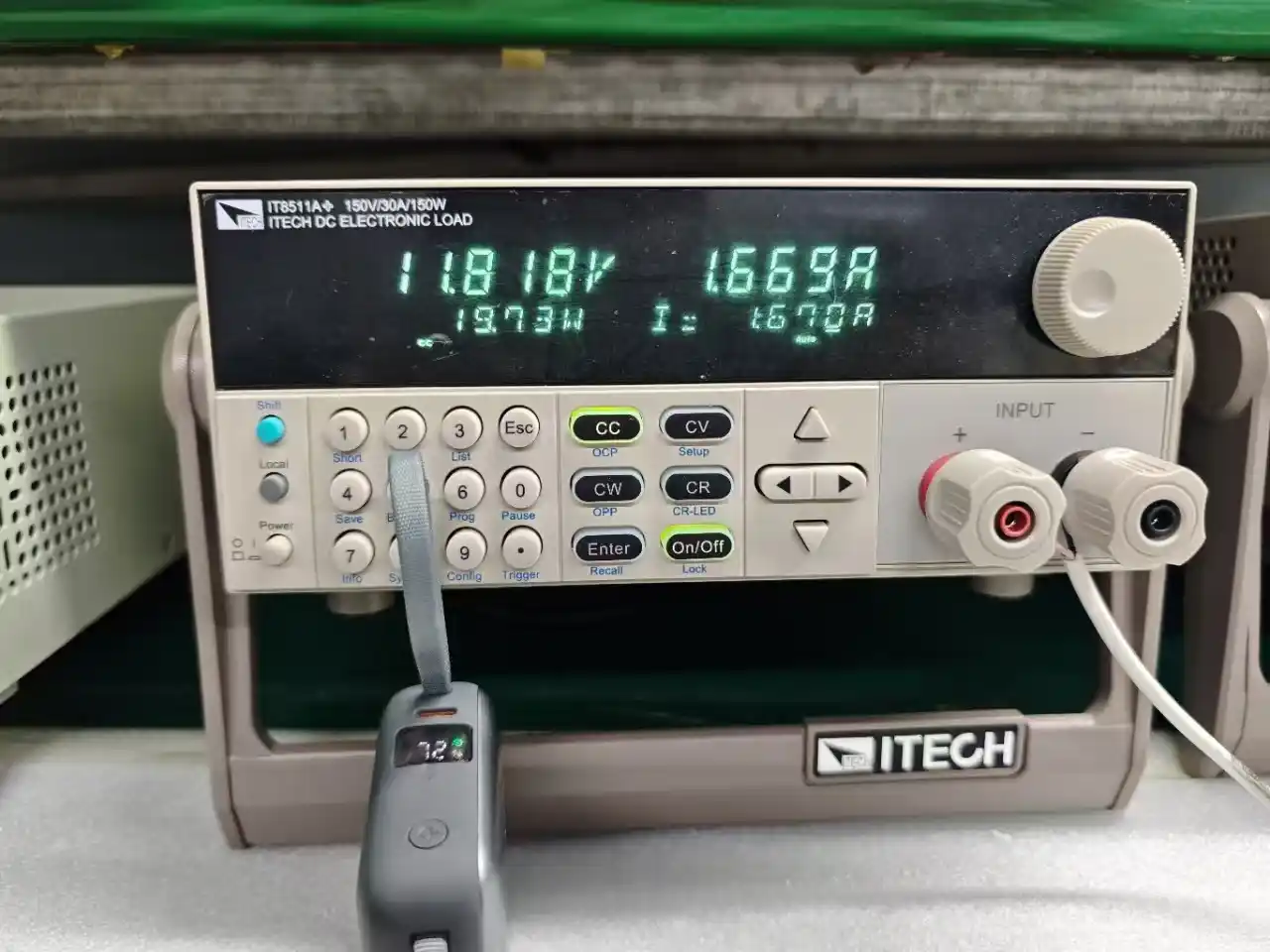
Fast charge voltage compliance testing: PD 3.1 PPS verification across 20mV increments, required for both FCC Part 15B and CE EMC Directive certification, testing costs $1,500-3,500 per model
| Certification | Cost | Timeline | Notes |
|---|---|---|---|
| UL 62368-1 | $1,500-$3,000 + annual audit | 4-8 weeks | Amazon requirement |
| FCC Part 15B SDoC | $500-$1,200 | 2-4 weeks | Self-declaration |
| FCC ID (wireless) | $2,000-$5,000 | 3-6 weeks | TCB required |
| CE (LVD+EMC+RoHS) | $1,500-$3,500 | 3-6 weeks | Self-declaration |
| CB Scheme | $2,000-$4,000 | 6-8 weeks | Multi-market |
| DOE Level VI | $1,000-$2,000 | 1-2 weeks | Combined with safety |
| EU USB-C/PD | $1,000-$2,500 | +1-3 weeks | New 2026 mandate |
| UKCA | $800-$1,500 | 2-3 weeks | Post-Brexit |
8. Who Is Legally Responsible? Importer Obligations
In both the US and EU, the importer, not the overseas factory, bears legal responsibility for compliance. US Customs and Border Protection (CBP) seizes non-compliant electronics at ports, and Amazon removes listings without valid UL test reports. In the EU, national market surveillance authorities can force product recalls and impose fines up to 4% of annual turnover under the Market Surveillance Regulation (EU 2019/1020). This makes factory selection and verification the single most important step in your certification strategy, a factory that swaps components after certifying puts your brand directly in the path of CBP seizure or EU recall orders.
US Importer Obligations
- Ensure FCC authorization before marketing
- FCC can seize non-compliant devices at customs
- Amazon removes listings without proof
- Maintain compliance records
EU Importer Obligations
- Appoint EU authorized representative
- Ensure CE Technical File is in place
- Verify production maintains conformity
- Maintain docs for 10 years
9. How to Verify Charger Certifications Are Real
A product marked "CE" or "FCC" doesn't automatically mean it's certified. WOWOHCOOL's QC team sees counterfeit or mismatched marks on a regular basis across the 200+ global client brands it supports — a printed logo costs nothing to add. Before you import, you need to verify that your supplier's certifications are genuine — not just a printed logo on the label.
1. FCC ID Lookup (US Market)
Every FCC-certified device has a unique FCC ID printed on the product label. Verify it in 60 seconds:
- Find the FCC ID on the charger label (format: 2 letters + numbers, e.g. 2AOKL-WOC42)
- Go to fcc.gov/oet/ea/fccid
- Enter the FCC ID — if genuine, you'll see the manufacturer name, test reports, and grant date
- Red flag: No result, or manufacturer name doesn't match your supplier
2. UL File Number Verification
UL certification to UL 62368-1 is verified through UL's public database:
- Look for the UL mark with a file number (format: E + 6 digits, e.g. E123456)
- Search at productiq.ul.com
- Verify the file number matches your supplier's legal entity name
- Red flag: File number belongs to a different company, or certificate is expired
3. CE Marking & EU Declaration of Conformity
The CE mark is a self-declaration — the manufacturer prints it themselves. This makes it the most commonly counterfeited mark. Three-step verification:
- Request the DoC: Every CE-marked product must have a signed EU Declaration of Conformity listing the specific directives (LVD 2014/35/EU, EMC 2014/30/EU, RED 2014/53/EU for wireless) and harmonized standards applied (EN 62368-1, EN 55032, EN 55035)
- Check the Notified Body number: If the CE mark includes a 4-digit number (e.g. CE 0197), verify it at EU NANDO database. Fake numbers are common — the database confirms if the body is real
- Cross-check the test report: The DoC must reference a test report from an accredited lab. Ask for the original PDF with the lab's letterhead — not a photocopy
4. GS Mark (Germany) — The Gold Standard
GS (Geprüfte Sicherheit) is voluntary but the most trusted EU safety mark because it requires factory inspection, not just product testing.
- Verify at issuing body's certificate database (TÜV Rheinland: certipedia.com, TÜV SÜD, SGS, DEKRA, VDE)
- GS mark guarantees annual factory audits — a CE mark alone does not
5. Quick Visual Red Flags
| What You See | What It Means |
|---|---|
| "CE" in wrong font (curved C, flat E) | Fake. Real CE uses specific proportions: semicircle C + E with horizontal bars |
| "China Export" mark (narrow spacing) | Not the same as CE — deliberate counterfeit. Arms almost touching = China Export |
| FCC logo without FCC ID number | Invalid. FCC Part 15 requires FCC ID on the product, not just the logo |
| UL mark without file number | Likely fake. All UL-listed products must show the UL file number |
| CE + FCC + UL all on same label, no numbers | High probability of counterfeit — genuine multi-cert products have traceable IDs |
Bottom line: Never accept a certification at face value. A printed mark costs nothing to add. What matters is the verifiable paper trail — FCC ID, UL file number, EU Declaration of Conformity, and test reports from accredited labs. WOWOHCOOL provides all certification documents with OEM orders, including original test reports, DoC, and database lookup instructions for every certification on your product.
10. Common Compliance Pitfalls & How to Avoid Them
Assuming CE = FCC
No mutual recognition. Separate testing always required.
Fake Factory Certificates
Always verify against issuer database (FCC ID, UL Product iQ).
Component Substitutions
Factories may swap certified components after certification. Prevent this with pre-shipment quality control inspections verifying BOM against certification submittal.
Missing UL Annual Audit
Loss of listing = loss of Amazon and retail access.
No EU Authorized Representative
Required by EU law. Products can be blocked at customs.
USB-C PD Handshake Failure
Having a Type-C port is not enough. PD protocol must pass compliance testing.
11. OEM Certification Checklist: Before You Import & Ship
These 9 verification checkpoints reflect the actual compliance failure patterns WOWOHCOOL's team sees across 200+ global client brands. Each item maps to a specific customs rejection, Amazon listing removal, or EU market surveillance enforcement trigger, skipping any single checkpoint exposes importers to shipment seizure, product recalls, or fines up to 4% of EU annual turnover.
- ★Verify UL test report covers your specific model number
- ★Confirm FCC authorization type matches product (SDoC vs. FCC ID)
- ★Ensure EU Technical File includes LVD, EMC, RoHS, ErP
- ★Verify USB-C PD compliance for EU (EN IEC 62680-1-2/3)
- ★Check DOE Level VI no-load power <0.1W
- ★Appoint EU Authorized Representative
- ★Match product label output to test report exactly
- ★Schedule pre-shipment inspection for component verification, see our shipping from China guide for customs documentation
- ★Set annual UL audit calendar
EXPERT INSIGHT
"The single most expensive mistake we see importers make is assuming their factory's 'CE certificate' is real. A genuine CE test report costs $1,500+, if the factory included it in a $3.50/unit quote, it's fake. Always verify certificates on the issuing body's database, not the PDF the factory sent you."
Nina Nico, Global Procurement & Sourcing Manager at WOWOHCOOL
WOWOHCOOL FACTORY STAT
As an ISO 9001 certified manufacturer since 2013, WOWOHCOOL manages UL, CE, FCC, RoHS, Qi2, and UN38.3 certifications across all product lines, from heating apparel batteries to GaN chargers, serving 200+ global client brands with a production yield above 98%.
Frequently Asked Questions
What certifications do OEM importers need to sell chargers in the US?
FCC Part 15B mandatory (SDoC for wired, FCC ID for wireless). UL 62368-1 is commercially essential, Amazon and major retailers require UL listing or face delisting. ETL/CSA are accepted NRTL alternatives. Budget $1,500-3,000 for UL, $500-1,200 for FCC SDoC. Timeline: 4-8 weeks for UL, 1-2 weeks for FCC SDoC. DOE Level VI energy efficiency compliance is also mandatory for external power supplies.
What certifications are required for EU charger sales?
CE marking covering LVD (EN 62368-1), EMC Directive (EN 55032/55035), and RoHS. EU Common Charger Directive 2022/2380 mandates USB-C for all chargers. ErP 2009/125/EC: standby ≤0.1W, active efficiency ≥87%. WEEE registration required. The importer must sign the Declaration of Conformity in their own company name, a factory's DoC is legally invalid. Budget $1,500-3,500 for full CE compliance.
How long does certification take and how much does it cost?
FCC SDoC: 1-2 weeks, $500-1,200. CE (LVD+EMC): 2-4 weeks, $1,500-3,500. UL 62368-1: 4-8 weeks, $1,500-3,000 plus annual factory audit. Full US+EU certification package (adds UL + REACH): $3,000-8,000 per SKU. Using pre-certified ODM platforms reduces timeline to 4-6 weeks. CE/FCC/RoHS standard package with UN38.3 bundled: $2,500-4,500. Always budget for pre-compliance testing ($500-2,000) before full certification to catch issues early.
Who is legally responsible for certification, the factory or the importer?
The importer bears full legal responsibility. The Declaration of Conformity must be in your company name. Your company name and address must appear on packaging as the responsible party. Never accept a factory-provided CE certificate with their name as the declaration holder, customs authorities will reject it. Maintain a technical file with original test reports for at least 10 years per EU requirements. WOWOHCOOL provides complete certification documentation with every OEM order, including original test reports, DoC templates, and compliance binders for US and EU markets. Request certification support for your product line.
What should OEM importers check before shipping their first order?
Five-point pre-shipment checklist: (1) Verify certifications match your exact SKU and target markets, not a generic series certificate. (2) Confirm hardware matches the certified unit exactly, same PCB, components, and firmware. (3) Get FCC ID or SDoC documentation plus UL file numbers, and cross-check them on official databases. (4) Lock the BOM in your purchase agreement to prevent unauthorized component substitutions that invalidate certifications. (5) Request and archive original test reports, not just certificate front pages, as these are required for customs clearance and retailer onboarding.
Global Procurement & Sourcing Manager · 10+ years in 3C procurement & sourcing
Nina Nico is WOWOHCOOL's Global Procurement & Sourcing Manager with 10+ years in 3C procurement. She specializes in B2B hardware sourcing, OEM/ODM power bank manufacturing, factory audits, supply chain quality assurance, and international trade compliance.
Factory Footprint
ISO 9001 Facility
Shenzhen, China
Export Countries
Engineers In-House
Ready to Source Certified Chargers?
WOWOHCOOL offers factory-direct OEM chargers with full certification support across US, EU, and APAC markets. Get your free compliance assessment within 24 hours.